Back to Blue, a global coalition to end ocean pollution
Economist Impact commissioned The Action Exchange to lead a multi-year global stakeholder engagement and analysis project to drive public- and private-sector action on ocean pollution.
Learn how we work with these clients:
→ Philanthropy and impact
→ Media
→ Government
Explore the services featured in this project:
→ Whitepapers and reports
→ Stakeholder engagement and coalition building
→ Qualitative research
What we delivered
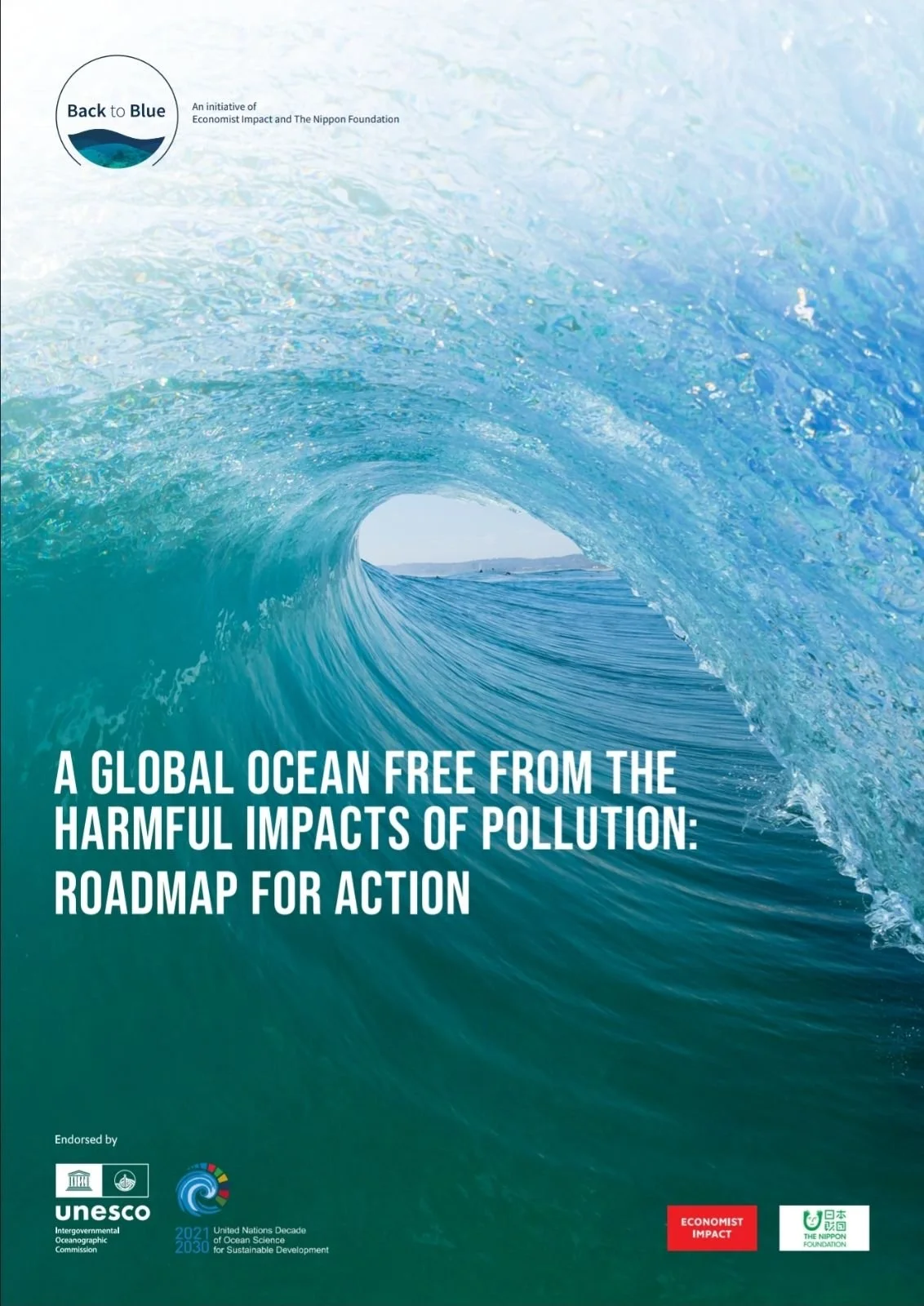
The Action Exchange developed a comprehensive stakeholder map, engagement plan and theory of change, using this to build an engaged network of influential leaders across policy, business, finance, science, and academia, and to inform a multi-year impact strategy. We conducted 200+ direct stakeholder engagements, convened thematic virtual workshops, joined a UN Ocean Decade working group, published a series of briefing papers and analytical research reports, and presented findings at major global ocean conferences. This engagement process culminated in the publication of a ‘Roadmap for Action’ co-designed with leading stakeholders in 2024.
Approach
The Action Exchange team was embedded within the Economist Impact Back to Blue team throughout this project, leading the marine pollution stream. Our role was to build an engaged community of influential ocean stakeholders committed to addressing marine pollution collaboratively, serving as the main point of contact and proactively establishing external partnerships. We had sole responsibility for implementing the engagement strategy throughout this five-year project. We brokered a partnership with key UN agencies and led Back to Blue’s participation in a UN Ocean Decade working group and other stakeholder forums.
Outcome
Back to Blue presented its Roadmap for Action to the 57th session of the Intergovernmental Oceanographic Commission (IOC) of UNESCO Executive Council in June 2024. In 2025, IOC UNESCO and the United Nations Environment Programme proposed to member states that Back to Blue’s recommendations be developed into a multi-decade priority UN programme as part of the UN Ocean Decade. This programme is expected to begin in mid-2026. Back to Blue has been widely recognised by leading ocean policy and business leaders as one of the most influential catalysts of action on ocean pollution globally, including at major events such as the UN Ocean Conference in Nice in June 2025 and the United Nations Environment Assembly in Nairobi in December 2025.
In this podcast, The Action Exchange's Jessica Brown, who has led a two-year stakeholder engagement project to inform the roadmap’s recommendations, speaks with Economist Impact’s Naka Kondo the critical need to close the marine pollution data gap and why the roadmap matters.